Slimline Camel Tanks
At Global Rotomoulding, our Slimline Camel Tanks are purpose-designed for reliable rainwater storage where space is limited but performance can’t be compromised. Our slimline rainwater tanks combine a narrow footprint with generous capacity, giving homeowners and businesses a smarter way to collect, store, and use rainwater in tight areas. Built from strong, UV-stabilised polyethylene, our camel water tanks deliver long-term durability, excellent structural integrity, and a sleek profile that fits comfortably along walls, fences, and domestic service areas. Whether you’re updating an existing system or installing new storage, our slimline rainwater tanks offer a practical, modern solution backed by trusted Australian manufacturing.
Product Filters
Categories
Products
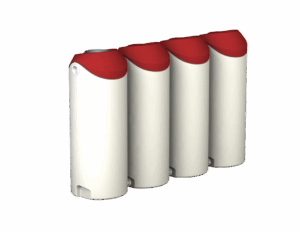
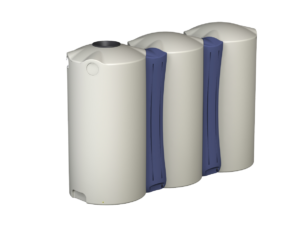
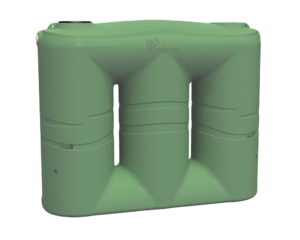
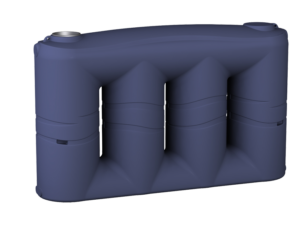
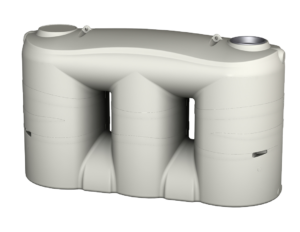
Global Rotomoulding’s Slimline Camel Tanks are created for customers who need strong, long lasting water storage with a compact footprint that suits modern homes and commercial sites. Each camel tank is built for stability, steady water flow and easy installation, making it a practical choice for properties with limited space or narrow access. Lightweight yet sturdy, our slimline rainwater tanks are simple to move into position and are designed to perform reliably throughout the year.
With a wide selection of slimline tank sizes available from 550 litres through to 5,000 litres you can choose the capacity that fits your water usage and site requirements. Every unit is manufactured locally and thoroughly tested for durability, UV resistance and structural integrity. When you select Global Rotomoulding, you are choosing Australian made slimline rainwater tanks that support sustainable water use and provide long term value.
Camel Tanks FAQs
What are the dimensions of your slimline camel tanks?
Our camel tanks come in a wide range of sizes, ranging 550L up to 5,000L. You can view the exact dimensions for each tank on the respective product page. However, we’ve also included a comparison chart below for simple reference, to help you choose the right tank for your needs.
| Model | Capacity | Footprint (W × D) | Height |
|---|---|---|---|
| GR-C550L / GR-C550E | 550L | 690 × 690 mm | 1,780 mm |
| GR-C1000L / GR-C1000E | 1,000L | 900 × 900 mm | 1,780 mm |
| GR-C2200U | 2,200L | 2,300 x 750 mm | 1,850 mm |
| GR-C2500U | 2,500L | 2,300 x 820 mm | 1,850 mm |
| GR-C3000U | 3,000L | 3,090 x 750 mm | 1,850 mm |
| GR-C5000U | 5,000L | 3,210 x 1,150 mm | 1,900mm |
How much space do I need to leave around a Camel Tank?
All Global Rotomoulding tanks must be installed with clearance between the tank wall and any other structure, including buildings, fences, and other tanks to meet compliance requirements.
The minimum clearance requirements can vary by location, but as a general rule, you should maintain a 450mm to 900mm boundary setback, 100mm to 300mm spacing from house walls, and a 550mm clearance above the tank. However, it’s important to check your local council regulations to ensure compliance.
What is the difference between a Lead Tank and an Extension Tank?
The Lead Tank is the primary unit in a modular Camel Tank setup. It contains the main inlet, outlets, overflow, and is the tank your downpipe connects to. Extension Tanks are add-on units that link directly to a Lead Tank or to other Extensions via a joining system.
You always need at least one Lead Tank. Extensions are optional additions to increase capacity. You can chat with our team to find the right tank set up to meet your needs.
Do Camel Tanks need a concrete slab?
We highly recommend that camel tanks are installed on a concrete slab. All Skinny Camel and Urban Camel Tanks must be placed on a suitable concrete slab at least 100mm wider and longer than the tank or tank group. The concrete slab must be of sufficient thickness and suitably reinforced to support the weight of the tank when full. It must also be smooth and level.
Camel tanks can also be placed on stands, however, Global Rotomoulding takes no responsibility for the suitability of tank stands.
Can a Camel Tank be installed on a tank stand instead of a concrete slab?
Tank stands may be used as an alternative to a concrete slab, subject to several requirements:
- Bearers must have sufficient strength to prevent deflection when the tank is full.
- Use hardwood decking with a maximum gap of 12mm (1/2”) between slats, or exterior grade plywood.
- Do not use corrugated iron.
- Support inlet/outlet pipes from the tank stand, and not from the tank wall.
Global Rotomoulding takes no responsibility for the suitability of tank stands, if you choose to use them instead of concrete.
Does the site need to be level?
Yes. The installation site must be completely smooth, level, and free from rocks/stones or other foreign objects that may damage the base of the tank. Tanks installed on uneven ground are under constant uneven stress, which can cause stress fractures over time. Excavated areas or any loose soil must be well compacted before the concrete slab is poured or the tank is positioned to ensure a level surface.
What should I do if the camel tank is delivered before installation is ready?
It is your responsibility as purchaser to secure the tank immediately on delivery. An empty polyethylene tank can be displaced by wind. Secure it by either tying down with rope or wire, or by filling to 10% of capacity with water. Do not leave an empty, unsecured tank unattended in exposed conditions.
What fittings do Camel Tanks come with as standard?
Standard fittings vary by model:
- 550L and 1,000L Camel Lead Tanks: decorative covering, 2 × 2-inch outlets, 300 mm leaf strainer and light guard, 90 mm overflow
- 2,200L Urban Camel: 2 × 1-inch outlets for pump (one each end), 4 × 3/4-inch outlets at bucket height (one on each corner), 300 mm leaf strainer and light guard, 90 mm overflow
- 5,000L Urban Camel: 2 × 1-inch outlets for pump (one each end), 4 × 3/4-inch outlets at bucket height (one on each corner), 400 mm leaf strainer and light guard, 90 mm overflow
Do I need council approval to install a slimline camel rainwater tank?
Requirements vary by state, territory, and local council. In most Australian jurisdictions, rainwater tanks under a certain capacity and installed in certain ways do not require approval, however, setback rules, connection requirements, and plumbing regulations still apply.
Always check with your local council before ordering and installing a camel rainwater tank. You can also explore our Installation Requirements page to learn more about how to maintain your warranty.