The post When to Choose a Cone Bottom Tank vs a Flat Bottom Tank appeared first on Global Rotomoulding.
]]>Cone bottom tanks and flat bottom tanks both have their place, but it’s important to choose the right one for your needs. This article will explore the key design differences between these two tank types and the common applications for each to help you make informed decisions.
Cone Bottom Tanks vs. Flat Bottom Tanks
Cone bottom tanks are installed on an elevated framework and taper down to an outlet right in the centre of the base. This allows for complete drainage every time, making them ideal for efficient mixing and chemical batch processing, while minimising risks of cross contamination.
In contrast, flat bottom tanks are designed to sit directly on a cement slab on the ground, and are designed for large storage capacity. Gravity draws liquid towards an outlet at the base to release as much liquid as possible, however, a small amount generally remains just below the outlet. These tanks are typically designed for general, bulk or long-term storage where frequent total cleanout isn’t critical.
When to Choose a Cone Bottom Tank
Complete Drainage is Required
Cone bottom tanks are ideal for any application where total drainage is essential. Complete batch recovery is important in a range of industries and applications. Whether it’s chemical dosing systems where accurate volume control is critical, food-grade applications where waste is costly, or tanks holding expensive reagents or concentrates, any liquid left in the bottom of the tank can equate to significant financial losses or throw off mixtures.
Cone bottom tanks allow for complete drainage, eliminating loss and wastage.
Solids, Sediment, or Settling are Involved
Most processes involving suspended solids, such as fertiliser concentrates, slurries, biological treatments, and mixing applications are better suited to cone bottomed tanks. This is because sediment tends to settle on the base of the tank.
In a flat bottom tank, this means the solids would generally settle below the outlet, meaning it would need to be manually agitated or flushed to remove it. However, in a cone bottom tank it will collect in the cone and simply exit with the liquid when the outlet is opened.
Batch Processing and Mixing Applications
Cone bottom tanks are best suited for batch processing or mixing applications. The conical shape supports complete product transfer between cycles, prevents cross-contamination between batches, and simplifies cleaning procedures.
Cone bottom mixing tanks are commonly used in agricultural settings for fertiliser blending, chemical preparation, and spray mix staging, as the shape supports efficient blending and allows the user to get all solids and liquids out of the tank effectively.
Hygiene and Cleaning Requirements are High
The absence of corners, flat surfaces, and dead volume in a cone bottom tank significantly reduces the surface area where biological growth, residue, or contamination can accumulate. It also makes them slightly easier to completely flush out and clean. This makes them ideal for applications where cross contamination or hygiene are critical concerns, such as chemical processing, agricultural mixing, and food-grade applications.
When considering a tank for any chemical application, it is important to understand and comply with strict safety standards to prevent contamination, accidents, injuries, or fines.
When to Choose a Flat Bottom Tank
Long-Term Bulk Storage is the Primary Use
Flat bottom tanks are commonly used for applications where liquid is stored rather than processed, and complete drainage is not as essential. If the tank is being drawn down frequently and refilled with the exact same liquid, the small amount of residual liquid in the base is often less costly or risky.
This makes them ideal for storing bulk qualities of rain water, diesel, or chemical concentrates long-term.
Installation Site is at Ground Level
Cone bottom tanks must be elevated to allow the outlet in the base to function, whereas flat bottom tanks can be installed directly on a prepared concrete slab. This often allows for quicker, easier, and often more cost effective installation.
However, installation and space constraints must still be met, such as meeting minimum clearance requirements, and preparing an adequate cement slab and drainage area.
Quick Comparison Guide
Cone bottom and flat bottom tanks are both great options for various applications. Choosing the right tank will depend on what you need the tank to do.
| Choose Cone Bottom Tanks when: | Choose Flat Bottom Tanks when: |
|
|
Choosing the Right Storage Tank for Your Needs
At Global Rotomoulding, we design, manufacture and supply both cone bottom tanks and flat bottom tanks for diverse industries and applications. Whether you need a solution for efficient chemical processing or long-term liquid storage, we can help you find the perfect solution.
Beyond the application, the specific chemicals being stored and the storage conditions can impact the suitability of any tank.
Before making any decisions, it’s important to contact Global Rotomoulding for a chemical assessment. Simply provide the name of the chemical you need to store, the concentration, SDS and expected operating conditions, and our team will review chemical applications with our raw material suppliers and chemical resistance data providers and provide a tailored recommendation for your applications.
Important Notice
Chemical information is provided as a guide only and should not be considered a guarantee of field performance. The suitability of any tank is influenced by factors including tank design, processing, operating conditions, chemical concentration and temperature. Final suitability should always be confirmed before storage or transportation of any chemical product.
The post When to Choose a Cone Bottom Tank vs a Flat Bottom Tank appeared first on Global Rotomoulding.
]]>The post Bunding Regulations in Australia: What You Need to Know appeared first on Global Rotomoulding.
]]>Whether you’re storing chemical concentrates on a farm, fuels at a depot, or hazardous liquids at an industrial facility, Australian regulations are strict. If a spill has the potential to reach soil, stormwater, or waterways, secondary containment measures are mandatory.
This guide explains what bunding is, which Australian standards and regulations apply, how capacity requirements are calculated, and what a compliant bunding setup actually looks like in practice.
What is Bunding and What Does it Do?
A bund is a secondary containment structure designed to capture liquid in the event of a primary container failure, leak, overflow, or spill. Many chemicals, fuels, and other liquids have the potential to injure personnel or contaminate environments if they escape their primary containment structures, that’s why it is essential to ensure you have bunding measures in place to contain any spills quickly and effectively.
Bunding comes in a wide range of designs and options to suit diverse storage needs, from fully enclosed bunds and open bunds to bin liners and pallets.
Bunding is a regulatory requirement in Australia, and failure to maintain compliant bunding is a legal liability and a potential criminal offence under environmental protection legislation in every Australian state and territory.
Which Australian Regulations and Standards Apply?
Bunding requirements vary depending on the specific hazard class of the stored chemicals, however, there are standard rules that apply as standard:
- AS 1940: Governs the storage and handling of flammable and combustible liquids.
- AS 3780: Governs the storage and handling of corrosive substances.
- AS/NZS 3833 & AS/NZS 4452: Apply to mixed dangerous goods, toxic chemicals, and pesticides
Australian Standards, such as AS 1940 – Storage and Handling of Flammable and Combustible Liquids, require that the bund holds at least 110% of the volume of the largest single container or tank stored inside the area, or at least 25% of the total aggregate storage volume of all containers combined, whichever volume is greater.
Moreover, bund walls and floors must be made from materials that resist chemical breakdown from the specific liquids stored. The areas must also be completely sealed off from general stormwater drains, soil, and unapproved sewer lines to prevent potential contamination.
Under AS 3780, incompatible classes of dangerous goods, such as Class 3 flammable liquids and Class 8 corrosives, are required to be kept in separate bunded areas to prevent mixing, contamination and major accidents.
To learn more about safely storing chemicals in Australia, you can explore our full guide or reach out to our team for detailed and tailored advice.
How Bunding Capacity is Calculated
The 110% rule is the foundational capacity requirement across Australia, this means that the bund must be capable of holding 110% of the volume of the largest single container within the bunded area. This ensures that a complete failure of the largest tank can be fully contained with capacity to spare. Alternatively, the bunding must be able to hold at least 25% of the total aggregate storage volume of all containers combined.
It is important to note that bund capacity refers to the actual volume of liquid the bund can hold, rather than the gross internal dimensions of the bund walls. This is important because any items placed inside the bund will take up space and reduce the capacity of liquid the bund can hold. Therefore, when calculating capacity you are calculating the net available volume, after accounting for displacement from items stored inside the bund.
Bund Construction and Material Requirements
Bunds must also be constructed from materials that are impermeable to the liquid being contained, resistant to degradation, and feature no unsealed gaps where liquids can escape.
Rotomoulded polyethylene bunding is ideal for most applications as it is impermeable to a wide range of agricultural and industrial chemicals. Additionally, rotomoulding ensures there are no seams of weld points that can fail over time.
While polyethylene is safe for most chemical storage applications, it is essential to confirm suitability prior to selecting a bund as the concentration of the chemical, storage temperature, operating conditions and even what was previously stored in the tank can all influence performance. By providing the chemical name, SDS, concentration and operating temperature, our team can work with material suppliers and chemical compatibility data to help determine whether a polyethylene bund is suitable for your application.
There are two main types of bunding configurations:
- Open bunds: Suitable for indoor applications where overhead clearance allows, providing easier access for refilling and pump connections.
- Closed bunds: Best for outdoor or exposed applications where rainfall or other debris can get into the bund and reduce volume available.
Pallet bunds are also available in both open and closed configurations to suit your site and needs.
Where Bunding is Required
Bunding is a mandatory requirement across any industry or sector that stores hazardous liquid chemicals on-site, such as:
- Agriculture and farming
- Food and beverage sectors
- Transport and logistics depots
- Civil industries
- Mining and resource management
Inspection, Maintenance, and Documentation Requirements
A bund that meets the relevant standards at the time of installation can fall non-compliant if not maintained appropriately. To ensure your bunding remains compliant and ready for an emergency, it is essential to conduct regular inspections of bund walls, floor, and any penetrations for cracking, chemical attack, or physical damage. Moreover, bunds should be inspected and cleaned regularly to ensure that debris or water are not sitting in the bund and reducing the capacity.
If you ever notice that your bunding is showing signs of cracking, UV degradation, or deformation from chemical exposure, it should be replaced immediately. This ensures that you always have a fully compliant and usable solution available in the event of a spill.
Additionally, inspection records must be maintained and easily accessible for regulatory audits. In the event of an incident, documented compliance history is critical evidence of due diligence, and can protect you from significant legal liabilities.
Maintain Compliance with Reliable Bunding Solutions
Maintaining compliant bunding is essential for ensuring safety and preventing serious environmental contamination in the event of a spill or leak.
At Global Rotomoulding, our industrial bunding range covers the full spectrum of secondary containment requirements. All products are manufactured from UV-stabilised polyethylene using precision rotomoulding, and are engineered to meet Australian standards for chemical resistance and structural integrity.
Contact our specialists today to discuss your chemical storage needs and find the right bunding solution for your site.
Important Notice
Chemical resistance information is provided as a guide only and should not be considered a guarantee of field performance. The long-term suitability of any tank is influenced by factors including tank design, processing, installation, operating conditions, chemical concentration and temperature. Final suitability should always be confirmed before storage of any chemical product.
The post Bunding Regulations in Australia: What You Need to Know appeared first on Global Rotomoulding.
]]>The post Creative Ways to Hide a 1000 Litre Water Tank in a Small Yard appeared first on Global Rotomoulding.
]]>Use the Tank’s Colour to Your Advantage
Water tanks come in a wide range of colours, so you can find a shade that works beautifully with your space. Choose from green, blue, white, red, black, grey, and plenty more.
If you want your tank to disappear into its surroundings, match its colour to the wall or fencing it sits against, that 1000 litre tank will blend right in and look like it’s always been part of the space. Dark greens work especially well in garden settings, softening the tank into the landscape.
Prefer to make a statement? Bold colours like blue, red, or aubergine turn your tank into a genuine feature piece, adding a pop of personality to the area.
Vertical Screening
A trellis or screening panels can be positioned in front of water tanks to hide them without looking out of place. Decorative laser-cut metal panels, timber trellises, or bamboo screens can add style and character to your space while hiding your water tank. You can also add potted plants or climbing plants to decorate the panels, make them blend into your space and provide more green space.
These panels can be safely installed around your tank without impacting access and performance, as long as you maintain the minimal clearance requirements for your particular tank. Installing screening is a simple, low-cost solution that adds to your yard while hiding your water tank.
Integrate the Tank into a Garden
Another great way to make a large water tank blend into your backyard is to surround it with plants and greenery. You can do this by surrounding the base of your tank with a raised garden bed or potted plants that grow up. The best way to hide a tank in a garden is to select structural plants that offer height and density, such as shrubs and hedges.
This method works particularly well with green-coloured tanks and makes your water a feature of your garden rather than a large object detracting from it.
Use Existing Structures
Many existing structures offer great ways to hide water tanks. Many water tanks, especially slimline camel tanks can be installed behind sheds, along property walls, fences, or in corners to conceal them within the space. This often removes the need for adding extra screening or plant life, as the right placement around these structures can handle the concealment well on their own.
If you have an existing deck, you may be able to install an underdeck tank beneath it, concealing the water tank from view and maintaining full usability of your space.
Opt for Slimline or Underdeck Tanks
While traditional, round 1000 litre water tanks or squat water tanks require a large footprint and can be difficult to conceal or camouflage, innovative options like slimline camel tanks, underdeck tanks, and underground tanks are perfect for narrow or small yards. These tanks can easily fit along walls or fences or be concealed under decks or underground, maintaining yard space and aesthetics while removing the need for additional concealment measures.
Installation Factors to Remember
When installing a 1000 litre water tank and implementing measures to conceal it, there are a few things you need to remember.
Firstly, proper installation in line with installation requirements is essential to ensure full performance and protect the tank. For a 1000L water tank, there should always be a minimum clearance of 7% of the diameter of the tank. The tank must be mounted on a level concrete base that is clear of debris. You must also maintain adequate drainage space and run overflow away from the tank.
Each tank will have specific guidelines that must be followed when installing to ensure full performance and warranty coverage.
Choose a 1000 Litre Water Tank that Blends into Your Yard
Water tanks are a great way to conserve water, reduce water costs, and make the most of renewable resources, however, we understand that they can stand out in your yard for all the wrong reasons. No one wants an eye-sore in their yard taking up valuable space and detracting from the aesthetics.
By choosing the right colour tank that complements your space, integrating it into gardens or hiding it along or beneath existing structures, you can enjoy all of the benefits of a water tank while also maintaining a usable and stylish yard.
At Global Rotomoulding, we provide a wide range of water tanks in various sizes, colours, and configurations to suit every property and aesthetic preference. Explore our extensive range or give us a call today to discuss your needs and find the right tank for you.
The post Creative Ways to Hide a 1000 Litre Water Tank in a Small Yard appeared first on Global Rotomoulding.
]]>The post Fire Fighting Equipment Grants Closing Soon appeared first on Global Rotomoulding.
]]>Australia experiences extreme summers, and with water restrictions already starting to come into place for many rural and remote areas, now is the time to ensure you have ample and reliable access to water and fire fighting equipment should the worst case scenario arise.
Two active grant programs are currently open for Australian landholders looking to establish or repair existing private fire fighting kits, and both end this month (September 2026). Keep reading to find out what’s available and who qualifies.
BlazeAid “All Fired Up” Grant: Open Now, Closes 30 September 2026
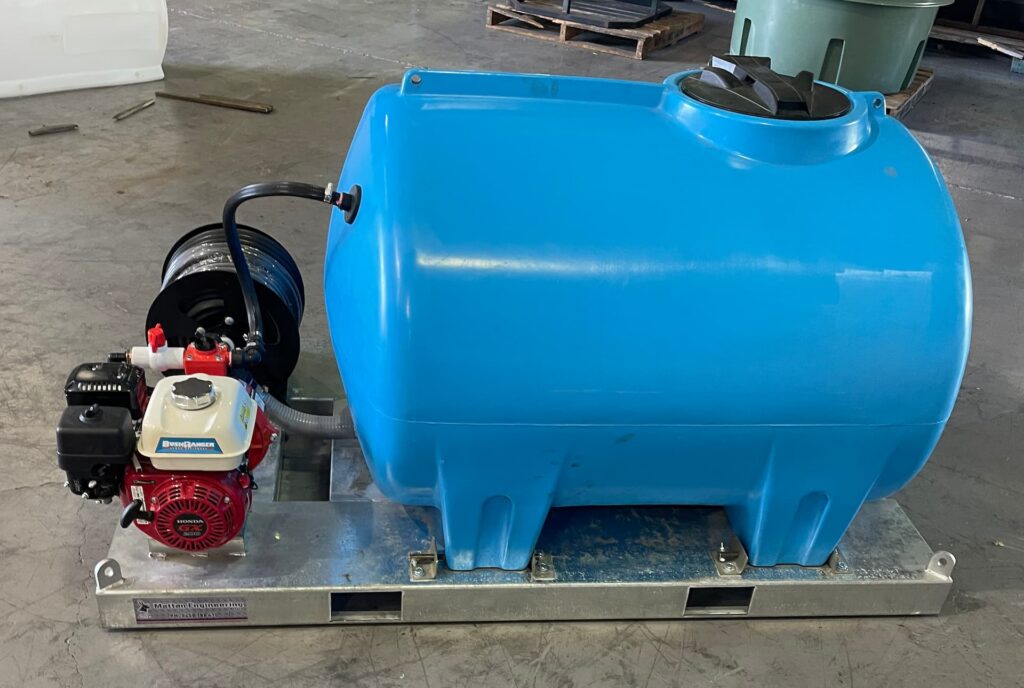
BlazeAid’s “All Fired Up” Grant offers a 50% co-payment grant covering repairs, servicing, and upgrades to private fire fighting equipment, such as baffled water tanks, pumps, hoses, nozzles,
UHF gear and first aid kits.
Landholders throughout Australia can apply, excluding South Australia. Simply get an itemised quote from your supplier and submit your application.
This grant opened on 1 September and closes 5pm, 30 September 2026, so you need to act fast!
CFS Regional Capability Community Fund: South Australia, Closes 18 September 2026
The CFS Regional Capability Community Fund is designed to support South Australian landholders to prepare for fire season. This grant offers up to $5,000 back on a new Farm
Fire Unit or up to $1,000 on tanks, pumps and hoses.
This grant is available to eligible property owners throughout South Australia.
Applications opened on 1 September and close 18 September 2026, so act now!
Importance of Setting up Private Fire Fighting Equipment
As the summer fast approaches and droughts and water restrictions set in, it’s important to ensure your property is prepared. Having a properly established, high-quality, and fully functioning fire fighting kit and reliable water storage can help protect your property, assets, and family when disaster strikes.
On rural, regional, or remote properties, fire fighting support can be hours away, so having a private system on your property can help you tackle fires as they emerge and while you wait for support. This can be the difference between a small impact and full devastation.
Act Now to Protect Your Property This Fire Season
These fire fighting grants are only available for a limited time, so you need to act fast! Submit your applications now to get your fire fighting set up ready for the extreme conditions with minimal financial impacts.
Contact Global Rotomoulding today to learn more about these grants, discuss eligibility, or get an itemised quote to support your application.
The post Fire Fighting Equipment Grants Closing Soon appeared first on Global Rotomoulding.
]]>The post The Impact of El Nino & Dry Conditions on Water Tank Supply appeared first on Global Rotomoulding.
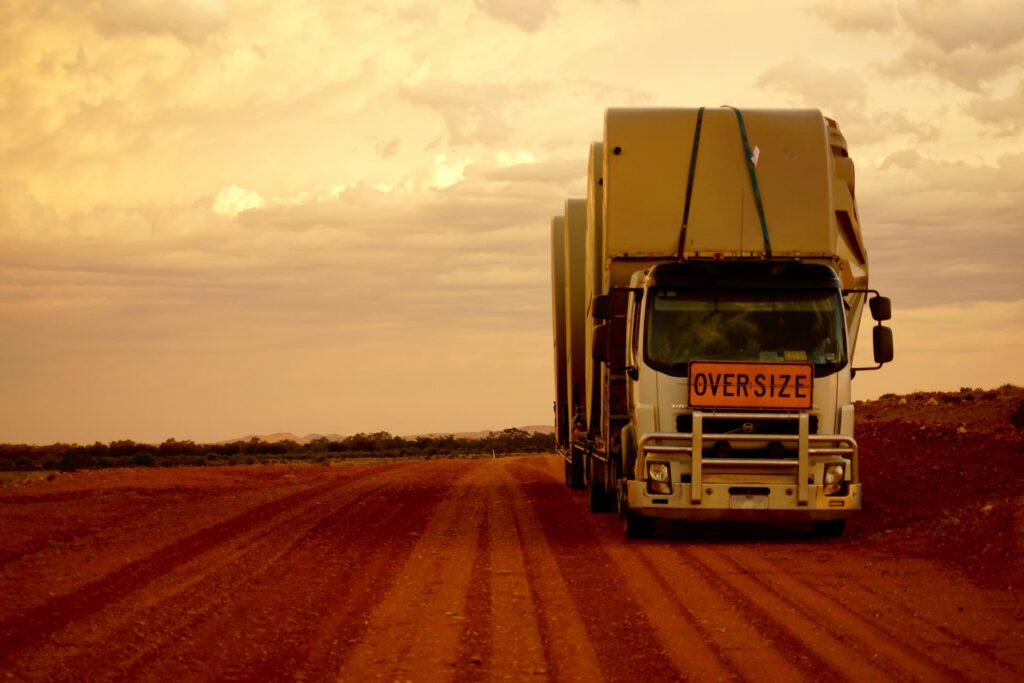
]]>Historically, El Niño patterns bring hotter temperatures, reduced rainfall, and extended dry periods across central and eastern Australia. This often translates into scarce water supplies, elevated fire risk, and increased demand for water storage and cartage equipment.
This post will explain what El Niño conditions mean for water storage supply this season and why the window to act is right now.
What El Niño Conditions Mean for Water Demand in Australia
El Niño conditions are historically associated with a pattern of hotter, drier conditions. Water access is critical for everyday use such as drinking and hygiene, as well as fire fighting and agricultural operations. These elevated temperatures and drought-like conditions can have serious consequences for various industries and people living in rural areas.
The industries most directly affected by these conditions are also the industries that depend most heavily on liquid storage and handling products, including:
- Agriculture: as rainfall decreases, the demand for water storage tanks, irrigation infrastructure, and cartage tanks intensifies
- Fire fighting: El Niño conditions can elevate fire risk, driving demand for cartage tanks, static water reserves, and complete fire fighting unit configurations
- Rural residential: hotter, drier conditions can also cause bore and dam levels to drop, leading to an increased demand in rainwater storage tanks
How Increased Water Demand Impacts Tank Availability
Demand for water storage solutions rarely increases gradually. Historically, it spikes suddenly as the conditions worsen, causing sudden surges for manufacturers and supply chains. Rotomoulding and water tank manufacturing is a precision process that requires careful planning, time for manufacturing and quality testing, and delivery times. This makes it difficult to scale at speed with little notice.
The supply chain for rotomoulded products involves multiple lead-time-sensitive stages that must be planned well in advance, including:
- Raw material forecasting: polyethylene resin must be ordered, and delivered before it can enter production
- Resin manufacturing and shipping: global resin supply is consolidated among a small number of producers; when demand is high across multiple markets simultaneously, lead times extend and allocation becomes competitive
- Production scheduling: rotomoulding production runs are planned in advance; inserting unplanned volume into a full schedule creates downstream disruption for other customers
- Quality and testing: finished water tanks must meet dimensional and performance standards before despatch
When demand increases suddenly it can be difficult for manufacturers to keep up, leading to extended lead times and limited availability.
Global Rotomoulding’s Approach to Seasonal Demand Planning
At Global Rotomoulding, we actively monitor seasonal trends and market conditions to help ensure we are prepared for expected demand fluctuations. As such, we are already taking measures to prepare for the upcoming summer and potential El Niño conditions.
That preparation includes forward procurement of polyethylene resin, production schedule planning across our manufacturing facilities, and logistics planning to support reliable delivery across our customer base during peak periods.
This planning helps to ensure that everyone who engages us early will receive the water storage tank supplies they need before conditions worsen and demand increases.
Why Effective Supply Planning is a Collaborative Process
Effective planning is most successful when it is a collaborative process between supplier and customer. Our team is already taking steps to prepare for expected demand increases, you can start planning now too, to reduce the risk of getting caught out when conditions get worse and lead times lengthen.
By sharing your anticipated requirements and forward forecasts with our team now, we can better align raw material procurement, production scheduling, and logistics planning to support your business or property needs during periods of increased demand. Early planning allows us to secure the resources required to deliver reliable water tank supply and minimise the risk of disruption when demand increases.
Why to Act Now
Summer always approaches faster than we expect. No matter how many Aussie summers or El Niño conditions you’ve managed through, the impacts can always be shocking. Rain dries up fast and temperatures increase significantly, leaving you scrambling to source the equipment you need, such as water storage and cartage tanks.
Planning early ensures you are prepared when the conditions get worse, not left on a waiting list with hundreds of others while your dams are drying and crops are dying.
Plan Now to Manage El Niño Conditions Confidently
Dry, hot, El Niño conditions can approach quickly; it’s crucial that your property and operations are prepared. As rainfall lessens and temperatures rise, so does the demand for water supply and storage tanks. Placing orders or expressions of interest now is the best way to ensure you receive what you need to manage the conditions when they arrive.
Contact Global Rotomoulding today with your anticipated requirements and forward forecasts to beat the summer demand.
The post The Impact of El Nino & Dry Conditions on Water Tank Supply appeared first on Global Rotomoulding.
]]>The post Tips for Safely Baffling and Transporting Liquids in Cartage Tanks appeared first on Global Rotomoulding.
]]>Understanding baffling, load management, and safe transport practices can help ensure smooth transportation of liquids.
What is Baffling and How Does it Work?
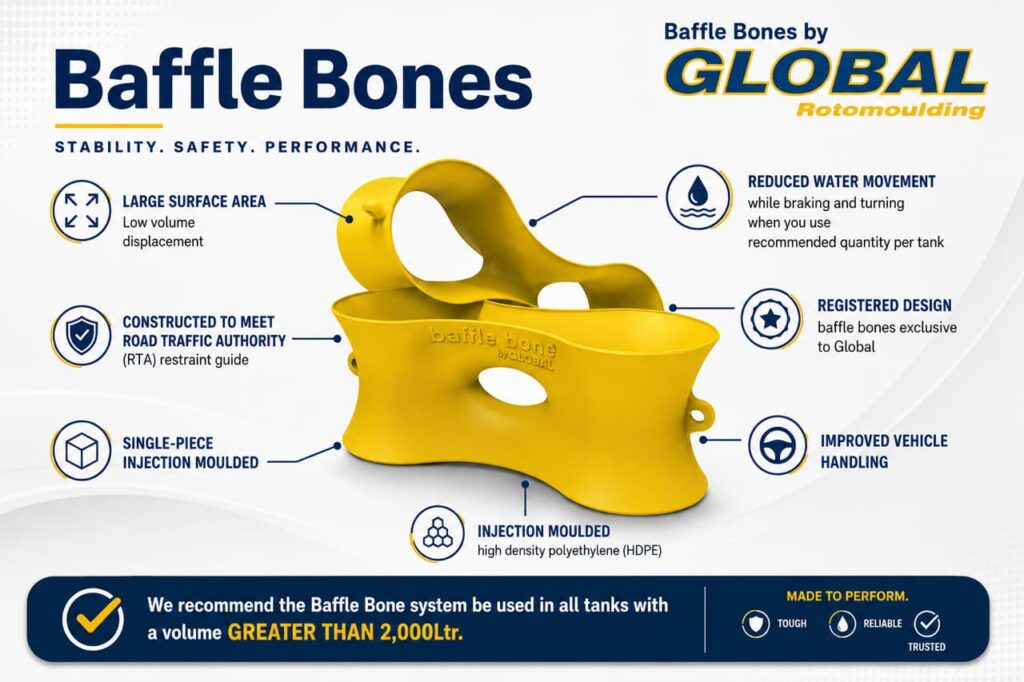
A baffle is an internal partition or divider within a tank that limits the movement of liquid inside cartage tanks. Baffling helps to reduce sloshing, in turn keeping vehicles stable when you brake, turn, or speed up. This enhances safety by reducing the risk of weight shifts which can make trailers sway, vehicles to become difficult to steer, and roll overs. Moreover, it protects the integrity of the cartage tank by reducing stress and friction, as well as preventing damage to your vehicle’s brakes, tyres, and suspension.
Unbaffled tanks rely on the operator correctly managing fill levels and driving to the conditions of the moving liquid and weight shifts.
At Global Rotomoulding, we supply a wide range of baffled cartage tanks for water, diesel and other chemicals, available in various sizes including 200L, 400L and 800L.
Tips for Safely Transporting Liquids in Cartage Tanks
Whether or not you opt for a cartage tank with built-in baffling, there are a number of steps you should always take to ensure the safe transport of liquids.
Managing fill levels for safe transport
For best results and safety, you should never transport a tank that is between 20% and 80& full, as this zone presents the highest risk of water movement and weight shifts.
For best practice, keep your cartage tank at the following levels:
- 90-100% Capacity: A full tank presents the least room for liquid movement inside the tank, thus keeping the tank and your vehicle steady.
- Under 20% Capacity: Low volume translates to low mass, so even if there is some movement, it should be low-impact and manageable.
If partial fill between 20-80% capacity is unavoidable, it is essential to drive more carefully. Reduce speed, take corners slowly, and increase following distances.
Securing the tank on the vehicle
Full cartage tanks are heavy and while moving it can be easy for them to fall off your tailor or vehicle if they are not secured appropriately. Many cartage tanks are designed to be strap mounted, allowing the tank to be secured to the vehicle or trailer using straps.
For best security, attached tanks with at least two straps, one on each end of the tank. Make sure to always secure tanks through dedicated anchor points or cradle frames to ensure minimal movement. It’s also good practice to check tie straps after the first 5-10km of travel to ensure that they are still secure, as liquid movement can compress any slack and shift the load.
Additionally, ensure the cartage tank is over or ahead of the trailer axle where possible to minimise the risk of sway and allow for maximum control.
Vehicle and trailer suitability
One of the most important steps when transporting anything is to ensure that the vehicle’s tow rating is matched to the weight being transported. Never attempt to transport a load that is heavier than your vehicle is rated to as this can present serious compliance and safety risks and potentially damage your vehicle.
It’s important to remember that certain liquid chemicals such as fertilisers are denser and therefore heavier than water. A 200L cartage tank full of water will be 200kg, however the same tank full of liquid fertiliser can weigh between 220 -270 kg. For this reason, it’s important to confirm the vehicle’s rating against the weight of what you’re actually transporting, not just the size of the tank.
Safe driving practices with a loaded cartage tank
Safe driving practices are always essential, however, there are some factors that need to be kept in mind when transporting liquids:
- Increase following distances: a vehicle transporting liquids can take longer to stop than one with solid-cargo due to movement or surges adding forward momentum to the braking load.
- Reduce cornering speeds: liquids can shift during turns causing vehicles to sway or add momentum in the opposite direction.
- Avoid sudden steering corrections: if sway develops or momentum from liquid movement pulls your vehicle, the instinct to counter-steer sharply can amplify the problem. Instead, it’s critical to maintain steady control.
- Take graded or unsealed roads at reduced speed: uneven or rough surfaces can generate rapid liquid movement inside tanks that can cause sway, loosen tie-downs or stress tank fittings.
- Pre-trip inspection: check all outlet valves and caps are closed and the tank is secured before moving off.
Fitting and valve maintenance
Inspect all outlet valves, cap fittings, and inlet seals before transport. If any fittings are not fully closed or if any leak, it not only wastes your liquid but it can also present serious safety hazards. Many liquid chemicals are combustible, meaning they can catch fire or explode if they come in contact with sparks or hot vehicle parts. Moreover, liquid chemicals can emit hazardous fumes, which can cause serious health concerns if breathed in during transport.
Additionally, if you’re transporting more than one liquid chemical and they mix it can cause serious reactions, depending on the chemicals.
Safe, Compliant Liquid Chemical Transportation
If you plan to transport liquid chemicals, it is essential that you invest in a compliant chemical cartridge tank to ensure safety. Many liquid chemicals including fertilisers and diesel are highly flammable and combustible, which can pose serious safety risks during transportation. Choosing compliant tanks ensures that you can store these hazardous chemicals for use while maintaining safety and peace of mind.
Cartage tank suitability, safety, and compliance depends on several factors:
- Chemical name and Safety Data Sheet (SDS)
- Concentration or dilution rate
- Storage temperature and operating temperature
- Exposure duration
- Whether the product is being mixed, agitated or recirculated
- Any other chemicals that may be added to the tank
Many liquid chemicals can degrade, damage, or cause polyethylene tanks to swell, resulting in stress cracking, leakage, and serious safety concerns. For this reason, it’s crucial to consult experts prior to purchasing a tank.
At Global Rotomoulding, we review chemical applications with our raw material suppliers and chemical resistance data providers before recommending a tank for chemical storage or transportation. If you provide the chemical name, concentration, SDS and expected operating conditions we can complete a detailed assessment to ensure you get the right cartage tank solution for safety, compliance, and peace of mind.
Ensure Safe Liquid Transport with Compliant Cartage Tanks
Proper preparation, careful driving, and investing in the right cartage tank are all essential for ensuring the safe transport of liquids, including water, diesel, fertilisers, and other liquid chemicals.
Whether you need to transport water for farm animals, diesel for refuelling vehicles across large properties, or liquid fertilisers to support healthy crops, Global Rotomoulding supplies a wide range of cartage tanks in various sizes and for various liquids.
However, it’s important to note that a short conversation before purchase can help prevent serious safety risks, compliance issues, and ensure your cartage tank delivers safe, reliable performance. If you’re planning to store or transport liquid chemicals, contact Global Rotomoulding and we’ll help assess the application before you buy.
Important Notice
Chemical information is provided as a guide only and should not be considered a guarantee of field performance. The suitability of any tank is influenced by factors including tank design, processing, operating conditions, chemical concentration and temperature. Final suitability should always be confirmed before storage or transportation of any chemical product.
The post Tips for Safely Baffling and Transporting Liquids in Cartage Tanks appeared first on Global Rotomoulding.
]]>The post How to Choose the Right Chemical Storage Tank for Your Farm appeared first on Global Rotomoulding.
]]>The right tank, on the other hand, ensures safe, compliant storage for your fertilisers or other chemicals, protecting your property, livelihood and peace of mind. However, with so many options available it can be difficult to know what you need. Let’s explore some key tips to choosing the right chemical storage tank for your agricultural needs.
Tips for Choosing the Right Chemical Storage Tanks
Whether you manage livestock or crops, safe chemical storage is essential for ensuring efficiency, productivity and compliance. Choosing the right tank is the key to making sure you always have the right amount of fertiliser or chemicals on hand when you need them.
When it comes to selecting the ideal chemical storage tank, there are a number of factors to consider, including the types of chemicals you need, how much you need, the ideal shape, whether it needs to be portable, the right materials, and your compliance requirements.
Understanding Chemical Compatibility
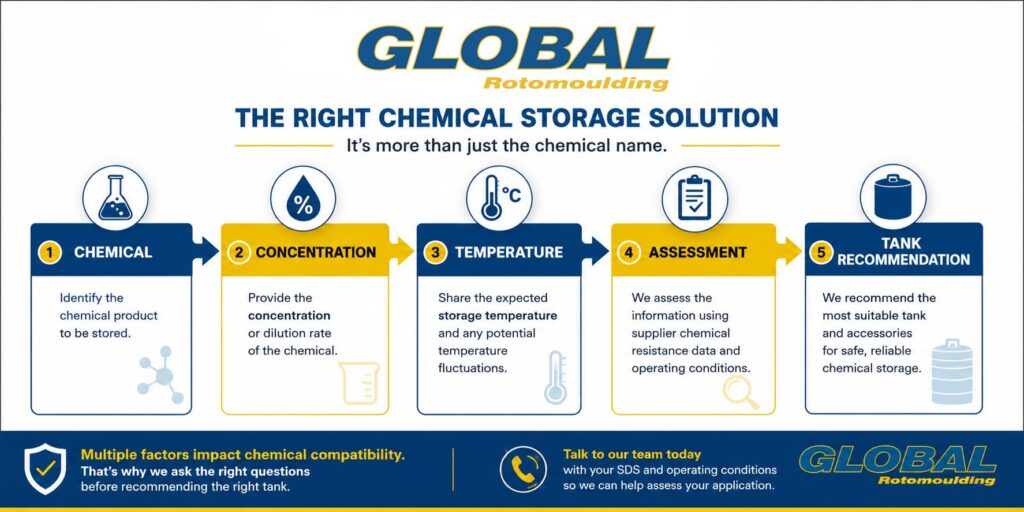
When it comes to storing chemicals, not all applications are the same. Polyethylene tanks are widely used throughout agriculture because of their durability and excellent resistance to many chemicals. However, chemical compatibility is not as simple as matching a chemical name to a tank. The concentration of the chemical, storage temperature, operating conditions and even what was previously stored in the tank can all influence long-term performance.
The suitability of a tank for your farm will depend on several factors, including:
- Chemical name and Safety Data Sheet (SDS)
- Concentration or dilution rate
- Storage temperature and operating temperature
- Exposure duration
- Whether the product is being mixed, agitated or recirculated
- Any other chemicals that may be added to the tank
Many chemicals can attack, degrade, soften or cause swelling of polyethylene. Other products, including some detergents, surfactants, alcohols, oils and solvents, may also increase the risk of environmental stress cracking, particularly where the tank is subjected to mechanical stress or elevated temperatures. Chemical compatibility can also change significantly as concentration and temperature increase.
Many common agricultural products are well suited to polyethylene storage tanks, including a range of fertilisers, acids, alkalis, salts and water treatment chemicals. Chemicals that are commonly compatible with polyethylene under many operating conditions include:
- Hydrochloric Acid
- Sulphuric Acid (at many concentrations)
- Phosphoric Acid
- Sodium Hydroxide (Caustic Soda)
- Sodium Hypochlorite
- Ammonium Sulphate
- Aluminium Sulphate
- Calcium Chloride
- Copper Sulphate
- Citric Acid
- Water and Brine Solutions
However, compatibility can change dramatically as concentration increases or operating temperatures rise. A chemical that performs well at ambient temperatures may not be suitable at elevated temperatures. Likewise, products that are safe at low concentrations may require additional consideration when stored in stronger solutions. This is why chemical storage should never be based solely on the name of the product.
When you contact Global Rotomoulding, we will review chemical applications with our raw material suppliers and chemical resistance data providers before recommending a storage solution. Simply provide the name of the chemical you need to store, the concentration, SDS and expected operating conditions to allow an assessment to be completed, and we can then provide tailored advice to help you find the right chemical storage tank for your farm.
Know Your Capacity Needs
Next, consider your capacity requirements. Tanks that are too small can lead to running out early and needing constant refilling, wasting time and doubling efforts. However, bigger isn’t always best either. A tank that’s too big can lead to chemicals sitting too long, which can reduce efficacy.
When choosing the right tank size, consider:
- Peak-season Volume — What’s the maximum amount of chemicals you need on hand at any given time?
- Delivery or Accessibility — How often do you receive chemicals or how often can you collect them and how much can you get at a time?
- Future Growth — Are your operations or needs growing? Will the tank you get now suit future needs?
Consider Tank Shapes & Designs
Chemical storage tanks come in a variety of shapes and designs to suit unique needs. From round, flat-bottom tanks to cone-bottom tanks and cylindrical cartage tanks, there are options for every need.
- Round, flat-base tanks offer stable, long-term storage. They are ideal for permanent installations where the priority is volume rather than portability or mixing.
- Cone-bottom tanks are purpose-built for complete drainage. The tapered base supports simple mixing and ensures that important nutrients or chemicals don’t settle on the base.
- Cartage tanks offer smaller volume holding and effective transportation. Their compact size supports cartage on the back of utes or light vehicles, perfect for getting chemicals to machinery or remote paddocks or pastures.
Stationary vs Cartage Tanks
Next, consider your operations and how you use the chemicals you’re storing. Some operations run bulk storage in a shed and pump to smaller units for application. Others need to transport chemicals directly to different paddocks or properties.
Large, stationary tanks are ideal for storing or mixing high volumes of chemicals in a centralised location. Conversely, cartage tanks are ideal for moving chemicals across large properties to spray or dispense directly from the tank to the paddock.
Spending on your operations, you may even need a combination of tanks to support your needs.
Choose the Right Material
The material that your tank is constructed from is one of the most important factors. Chemicals and harsh Australian conditions can corrode certain materials, leading to early replacement. High-strength, chemical-resistant materials, such as rotomoulded plastic offer long-lasting safety and storage solutions.
Rotomoulded plastics have no weld points, joints, or seams that can crack, corrode, or become failure points under chemical exposure. They are also UV stabilised to withstand the harsh Australian sun when stored outside.
UV exposure and temperature are two of the most commonly overlooked factors in chemical storage. As temperatures increase, chemical reactions generally become more aggressive. A chemical that can be safely stored at 20°C may have different compatibility characteristics at 40°C, 60°C or higher.
For this reason, we always recommend discussing both the normal storage temperature and any potential temperature fluctuations with our team to ensure that your chosen tank will withstand your unique conditions, temperatures and be compatible with your specific chemicals.
Compliance & Safety Considerations
Chemical storage on Australian farms is governed by a combination of state environmental regulations and Australian Standards. Requirements vary by state and by the classification and volume of chemicals being stored.
So, it’s essential to check that the tank meets the requirements in your local area for the chemicals you need to store. Additionally, a complex assessment from our team at Global Rotomoulding can help ensure that you get the right tank for your needs.
Change of Chemicals
Moreover, if you plan to use the tank for storing different chemicals, care must be taken when changing the chemical stored within the tank. Even if two products are individually compatible with polyethylene, they may react adversely when mixed together.
Before introducing a new chemical, tanks should be thoroughly drained, cleaned and washed down in accordance with the chemical manufacturer’s recommendations. Residual product left in the tank, pipework, valves or pumps may cause chemical reactions, contamination, heat generation, gas release, damage to the tank and associated equipment, or present safety hazards.
Where there is any uncertainty regarding chemical compatibility, cleaning procedures or changeover requirements, customers should consult both the chemical supplier and Global Rotomoulding prior to use.
Select the Right Chemical Storage Tank for Your Farm
Chemical storage is a critical application and every situation is different. When you choose the right tank, you will have peace of mind that your farm is safe, compliant, and that your tank will last for many years. A short conversation before purchase can help prevent costly mistakes and ensure your tank delivers safe, reliable performance for years to come.
By providing the chemical name, SDS, concentration and operating temperature, our team can work with material suppliers and chemical compatibility data to help determine whether a polyethylene tank is suitable for your application.
At Global Rotomoulding, we build and deliver purpose-built chemical storage tanks to support safe, durable, and compliant storage for agricultural operations. Using precision moulding technology, every tank is manufactured for strength, durability, and reliability. Our tanks meet all relevant Australian standards and withstand tough Australian conditions, while also supporting sustainable production to minimise environmental impacts.
If you’re searching for a chemical storage tank for your farm, contact Global Rotomoulding and we’ll help assess the application before you buy.
Important note
Chemical resistance information is provided as a guide only and should not be considered a guarantee of field performance. The long-term suitability of any tank is influenced by factors including tank design, processing, installation, operating conditions, chemical concentration and temperature. Final suitability should always be confirmed before storage of any chemical product.
The post How to Choose the Right Chemical Storage Tank for Your Farm appeared first on Global Rotomoulding.
]]>The post Safety Standards for Chemical Storage Tanks in Australia appeared first on Global Rotomoulding.
]]>In this guide, we will explore the importance of choosing compliant chemical storage tanks and the Australian and specific standards that need to be followed to ensure safe storage.
Importance of Compliance Chemical Storage Tanks
Investing in compliance chemical storage tanks is crucial for maintaining a safe environment and protecting against hazards and legal issues. Many liquid chemicals including fertilisers and diesel are highly flammable and combustible. Correct, compliant storage ensures that you can store these dangerous chemicals for use while maintaining safety and peace of mind for all.
Chemical Compatibility Considerations
Our polyethylene tanks are designed to provide excellent resistance to a wide variety of chemicals. However, it’s important to note that chemical storage and compatibility cannot be determined by name alone.
Tank suitability, safety, and compliance depends on several factors:
- Chemical name and Safety Data Sheet (SDS)
- Concentration or dilution rate
- Storage temperature and operating temperature
- Exposure duration
- Whether the product is being mixed, agitated or recirculated
- Any other chemicals that may be added to the tank
Many chemicals can degrade, damage, or cause polyethylene tanks to swell, resulting in stress cracking, leakage, and serious safety concerns. For this reason, it’s essential to consult experts prior to purchasing a tank.
At Global Rotomoulding, we review chemical applications with our raw material suppliers and chemical resistance data providers before recommending a chemical storage tank. If you provide the chemical name, concentration, SDS and expected operating conditions we can complete a detailed assessment to ensure you get the right solution for safety, compliance, and peace of mind.
Why Chemical Compatibility Matters When Selecting a Polyethylene Tank
When it comes to storing chemicals, not all applications are the same.
Polyethylene tanks are widely used throughout agriculture, manufacturing, water treatment and industrial industries because of their durability and excellent resistance to many chemicals. However, chemical compatibility is not as simple as matching a chemical name to a tank.
The concentration of the chemical, storage temperature, operating conditions and even what was previously stored in the tank can all influence long-term performance.
Not All Chemicals Behave the Same
Many common agricultural and industrial products are well suited to polyethylene storage tanks, including a range of fertilisers, acids, alkalis, salts and water treatment chemicals.
Examples of products that are commonly compatible with polyethylene under many operating conditions include:
- Hydrochloric Acid
- Sulphuric Acid (at many concentrations)
- Phosphoric Acid
- Sodium Hydroxide (Caustic Soda)
- Sodium Hypochlorite
- Ammonium Sulphate
- Aluminium Sulphate
- Calcium Chloride
- Copper Sulphate
- Citric Acid
- Water and Brine Solutions
However, compatibility can change dramatically as concentration increases or operating temperatures rise. A chemical that performs well at ambient temperatures may not be suitable at elevated temperatures. Likewise, products that are safe at low concentrations may require additional consideration when stored in stronger solutions.
This is why chemical storage should never be based solely on the name of the product.
Australian Safety Standards for Chemical Storage
Australia has a few safety standards that apply to the whole country and all industries storing dangerous chemicals on-site. These include Work Health and Safety regulations and AS1940:2017. Each state and territory, and individual industries also have specific regulations to ensure the safe storage of chemicals. All relevant standards and regulations must be met to ensure full safety and compliance.
Work Health and Safety (WHS) Regulations
Under Work Health and Safety (WHS) framework in Australia, all hazardous chemicals, including flammable and combustible liquids, must be stored securely and with clear management framework, such as:
- Safe Chemical Storage containers with clear handling systems, signage, and manifests for storage above 500L or 500kg.
- Risk Management Plan that identifies potential hazards, risks, and control measures.
- Emergency Plans to manage potential incidents involving the stored chemicals.
- Training for any personnel who may be handling the chemicals and responsible for enacting emergency procedures in the event of an emergency.
These regulations are enforced by Safe Work Australia and corresponding state agencies to ensure the safe storage and management of hazardous chemicals and potential emergencies.
AS1940:2017 — The Storage and Handling of Flammable and Combustible Liquids
In Australia, AS1940:2017 is the primary standard governing the storage and handling of flammable and combustible liquids. This standard outlines the design, construction, and maintenance of chemical storage tanks and facilities, and is mandatory across all states and territories.
Key provisions of this standard, include:
- Design and Construction: Chemical storage tanks must be made from materials suitable to the particular liquid to ensure structural integrity and compatibility.
- Ventilation: Storage tanks or facilities must provide adequate ventilation to prevent the accumulation of flammable vapours.
- Spill Containment: Facilities must have effective measures in place to contain spills.
- Distances: Minimum separation distances between storage tanks and property boundaries or protected places must be maintained to minimise potential incidents.
- Ignition Source Control: Measures must be in place to keep ignition sources a safe distance from liquid chemicals.
AS/NZS 4766 — Rotationally moulded buried, partially buried and non-buried storage tanks for water and chemicals
AS/NZS 4766 is the Australian standard that specifies the requirements for the design and manufacture of rotationally moulded, seamless polyethylene storage tanks. This standard is designed to ensure that these tanks are safe and secure for storing water and chemicals.
Key aspects of this standard include:
- Seamless Construction: Rotomoulded chemical storage tanks must be manufactured as a single-piece seamless construction with no joints or seams to prevent weak spots and leaks.
- Material Quality: Tanks must be constructed from high-quality, food-grade, UV-stabilized polyethylene.
- Wall Thickness: No section of the tank can be less than 4.5 mm thick, to ensure the tank can withstand long-term liquid pressure.
- Testing & Traceability: Manufacturers must perform rigorous testing, such as impact and ultrasonic thickness tests, to guarantee structural integrity.
State and Territory Regulations
The national standards above must be followed across Australia. However, each state and territory also has its own additional framework that must also be met to ensure safety and compliance.
Specific state and territory legislation includes:
- ACT: Work Health and Safety Regulation 2011: WorkSafe ACT Dangerous Substances Framework
- New South Wales: SafeWork NSW Storage and Handling of Dangerous Goods Code of Practice
- Northern Territory: Work Health and Safety (National Uniform Legislation) Act 2011 and Regulations, and NT WorkSafe Hazardous Chemicals Code of Practice
- Queensland: WorkSafe QLD Managing Risks of Hazardous Chemicals Code of Practice
- South Australia: Work Health and Safety Act 2012 (SA) and Work Health and Safety Regulations 2012: SafeWork SA Managing Risks of Hazardous Chemicals Compliance Code
- Tasmania: Work Health and Safety Regulations 2022: WorkSafe Tasmania Dangerous Goods Framework
- Western Australia: Dangerous Goods Safety Act 2004 and the Dangerous Goods Safety (Storage and Handling of Non-Explosives) Regulations 2007
- Victoria: Dangerous Goods Act 1985 and the Dangerous Goods (Storage and Handling) Regulations 2022
Industry-Specific Regulations
In addition to national and state regulations, there are also specific requirements for various industries that require chemicals for their operations, such as agriculture, mining, and food and beverage businesses. It’s essential to familiarise yourself with the regulations for your specific industry when planning to store hazardous chemicals onsite.
For example, farmers often need to store large amounts of diesel for their machinery and fertilisers for crop management. When storing these chemicals, farmers need to ensure that tanks are appropriately designed and located to maintain compliance and prevent contamination of soil and water sources.
Mining industries also require large volumes of diesel and chemicals for operations. Due to the harsh environmental conditions on mine sites, it’s crucial that chemical storage tanks are durable.
Additional Safety Procedures
In addition to the standards outlined in the Australian, state, and industry Standards, it’s important to always take care when handling chemicals.
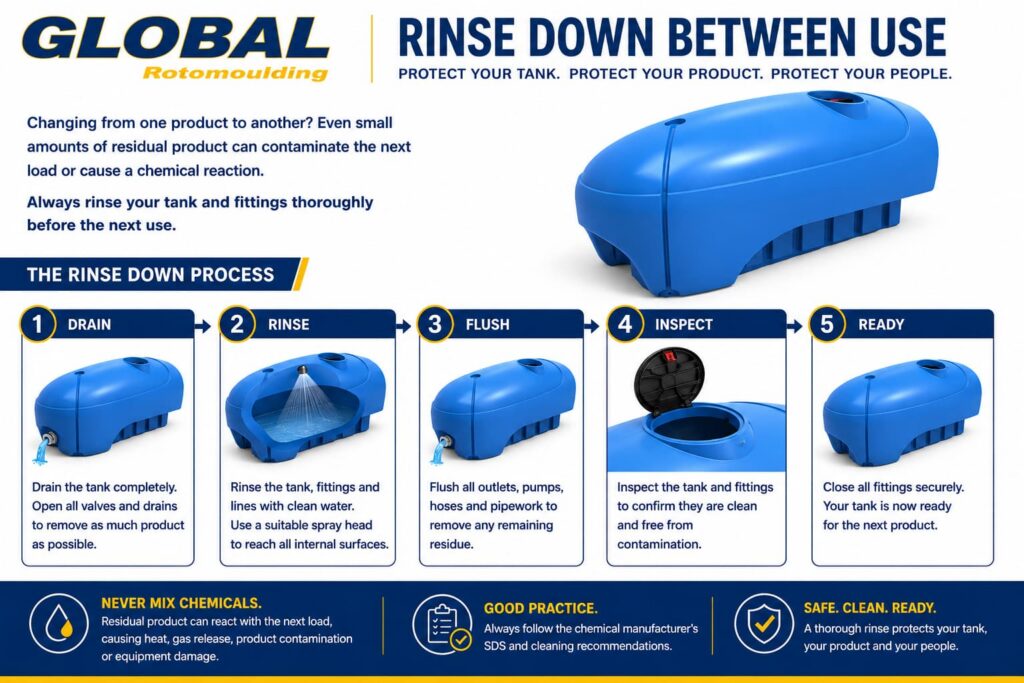
Wash Down Before Changing Chemicals
One of the most common causes of problems in chemical storage is changing products without properly cleaning the tank. Care should always be taken when changing the chemical stored within a tank. Even if two chemicals are individually compatible with polyethylene, they may react when mixed together. Small amounts of residue left in tanks, valves, pumps or pipework can sometimes lead to contamination, heat generation, gas release or unwanted chemical reactions.
Before adding a new or different chemical to a tank, make sure that the tank, pipework, valves and pumps are all thoroughly drained, cleaned and washed down in accordance with the chemical manufacturer’s recommendations. This helps to avoid potential chemical reactions, contamination, heat generation, gas release, damage to the tank and associated equipment, and improves safety for operators.
Where there is any uncertainty regarding chemical compatibility, cleaning procedures or changeover requirements, customers should consult both the chemical supplier and Global Rotomoulding prior to use.
Contact Us Before You Store Chemicals
Compliant chemical storage is essential not just for avoiding legal penalties, but also for protecting the environment and ensuring safety for personnel.
Chemical storage is a critical application and every situation is different. By providing the chemical name, SDS, concentration and operating temperature, our team can work with material suppliers and chemical compatibility data to help determine whether a polyethylene tank is suitable for your application.
A short conversation before purchase can help prevent costly mistakes and ensure your tank delivers safe, reliable performance for years to come. If you’re planning to store chemicals, contact Global Rotomoulding and we’ll help assess the application before you buy.
Important Notice
Chemical resistance information is provided as a guide only and should not be considered a guarantee of field performance. The long-term suitability of any tank is influenced by factors including tank design, processing, installation, operating conditions, chemical concentration and temperature. Final suitability should always be confirmed before storage of any chemical product.
The post Safety Standards for Chemical Storage Tanks in Australia appeared first on Global Rotomoulding.
]]>The post Why Camel Tanks Are the Best Solution for Narrow Block Homes appeared first on Global Rotomoulding.
]]>Standard, round water tanks just physically can’t fit on the blocks that many of us live on today. That’s where Slimline Camel Tanks come in. Camel Tanks are specifically designed to be slimline and compact to perfectly fit in narrow spaces, while still providing significant water storage capacity.
The Narrow Block Problem
The Australian population is growing each year, with 90% of the population concentrated in urban coastal regions. In the inner city regions, there are approximately 40,000 people per square kilometre. This is causing house blocks to shrink, in order to accommodate the growing population.
The smaller, narrow blocks that many of us are accustomed to now, don’t allow for easy side access or large open spaces to place or set up large items like traditional rainwater tanks. Some homes have as little as 600–900 mm between their house and the boundary fence. This doesn’t leave much room for storage.
However, as the cost of living increases and more of us are embracing sustainable practices, rainwater harvesting is becoming more appealing. Many homeowners would love to capture rainwater to irrigate their gardens, flush their toilets, or clean, to preserve town water and drive down water costs, but with their narrow yards, their options are limited — but not zero.
What Makes the Slimline Camel Tanks Different
Slimline Camel Tanks offer a solution for homeowners on narrow blocks to capture rainwater. Unlike traditional, large, round and squat water tanks that take up a large footprint and need metres of clearance all around them, Camel Tanks are designed to fit under eaves and in narrow spaces with minimal clearance.
Compact, Narrow Design
Ranging from compact 550L tanks up to 5,000L tanks, all of our Camel Tanks are designed to suit narrow blocks. Our largest tank is just 1,150 mm wide, perfectly suited for narrow side spaces, along the side of your home.
These slimline tanks are designed to use vertical space rather than a large horizontal footprint, making the most of the space available on smaller blocks. This allows homeowners to effectively store up to 5,000L of rainwater, depending on their space and needs, without wasting valuable yard space.
Under Eave Solutions
Slimline Camel Tanks are designed to fit perfectly under the eaves of your home, allowing them to be installed close to your building. These tanks need just 7% (of the tank diameter) clearance from walls, structures and fencing, allowing them to be placed right near your home, under the eaves and take up minimal space.
Our Camel Tanks range from 1,780 mm up to 1,900 mm high, suiting most properties.
Modular Systems to Scale Effectively
One of the best things about our smaller Camel Tanks 550L and 1,000L ranges, is that they can easily be scaled to suit your growing needs. If you want to start with a smaller tank, but then find down the line that you need more storage capacity, they can easily be paired with our extension tanks of the same sizes.
This offers a simple way to scale your capacity down the line without stress.
Our Camel Tank Range
Our Camel Tanks are available in various sizes to suit different blocks and rainwater storage needs, including:
- 550L Camel Rainwater Tank: These compact tanks are just 690 x 690 mm round and 1,780 mm high. This allows for decent water storage with a minimal footprint, and they can also be paired with extension tanks to expand your storage capacity as your needs increase.
- 1,000L Camel Rainwater Tank: These tanks fit in less than a square metre of space, just 900 x 900 mm round and 1,780 tall. These tank systems can also be expanded with additional tanks to scale your storage capacity.
- 2,200L Urban Camel Slimline Rainwater Tank: These tanks feature a sleek shape to complement homes and narrow spaces. These tanks are 2,300 mm long, 750 mm wide, and 1,850 mm tall, easily fitting under eaves and down the side of your home in narrow spaces.
- 2,500L Urban Camel Slimline Rainwater Tank: Featuring a sleek, aesthetic design that complements narrow blocks, these compact tanks are 2,300 mm long, 820 mm wide, and 1,850 mm tall.
- 3,000L Urban Camel Slimline Rainwater Tank: Designed to fit under eaves and along homes, these tanks offer reliable, space-efficient water storage. These tanks are 3,090 mm long, 750 mm wide, and 1,850 mm tall.
- 5,000L Urban Camel Slimline Rainwater Tank: The largest of our Camel Tanks, these tanks are designed to offer significant water storage capacity while still fitting on slightly larger, narrow blocks. These tanks are 3,210 mm long, 1,150 mm wide, and 1,900 mm tall.
Installation on Narrow Blocks
Despite narrow blocks often having limited side access, Silimline Camel Tanks are designed to be installed simply. You just need to make sure you have a stable, level cement slab for the tank to sit on. This slab needs to be at least 100 mm wider and longer than the tank, which is generally easily doable, even on narrow blocks.
You also need to confirm a minimum 7% clearance around all sides of the tank between walls or fences. Finally, confirm that the overflow can be installed to run well away from the tank — at least 6 m and not towards the neighbour’s property.
Once you’ve confirmed your available space and chosen the right tank for your narrow block and needs, you can order for timely delivery. Once it arrives, tanks can be easily maneuvered into place, though narrow entry ways, using the provided lifting points on the sides or top of the tank.
Compact Rainwater Storage Solution for Narrow Blocks
Living on a narrow block shouldn’t prevent you from conserving water and saving money. With Slimline Camel Tanks, people living on the smallest, narrow blocks can also capture rainwater to nurture their gardens, flush their toilets, and minimise water bills.
Explore our extensive range of durable, long-lasting and compact Camel Tanks today, or give us a call for tailored advice, and find the ideal water storage solution for your property.
The post Why Camel Tanks Are the Best Solution for Narrow Block Homes appeared first on Global Rotomoulding.
]]>The post Installation Guide: Setting Up Your Slimline Camel Tank appeared first on Global Rotomoulding.
]]>Slimline Camel Tanks are constructed from durable, UV-stabilised polyethylene, delivering long-term structural integrity, and a sleek profile that fits comfortably along walls, fences, and domestic service areas. However, if you’re considering one of these tanks, it’s crucial to understand the installation requirements before placing your order to ensure a smooth, compliant installation.
This article will explore everything you need to know to ensure a successful installation, from pre-installation and site selection to filling and testing.
Before You Start: Pre-Installation Checklist
Whether you need a small 550L Camel Tank or a larger 5,000L tank, it’s important to plan for a smooth installation. Follow this checklist before your delivery date to ensure your installation goes as smoothly and efficiently as possible. A few hours of preparation now, can prevent costly headaches or compliance issues down the line.
| Slimline Camel Tank Installation Checklist | |
| ☐ Site location confirmed and measured | ☐ Overflow discharge point identified (min. 6 m from tank base) |
| ☐ Concrete slab poured, cured, and level | ☐ Pump location planned (if applicable) |
| ☐ Slab is at least 100 mm wider/longer than tank on all sides | ☐ In-line filter sourced for pump connection |
| ☐ Slab reinforced to carry full water weight | ☐ Flexible couplings on hand for pipe connections |
| ☐ Slab surface smooth and free of sharp protrusions | ☐ Clearance from walls, fences, structures confirmed |
| ☐ Downpipe diverter or inlet connection planned | ☐ Council requirements checked |
Step 1: Select and Prep Your Site
Choosing the right site for your Camel Tank is essential for long-term reliability and compliance. The right site will be level, structurally sound, easily accessible for delivery, and positioned so the overflow can drain well clear of the tank base. Camel Tanks are specially designed for installation in tight spaces along fence lines, side passages, and under-eave installations.
It’s crucial to select your site early to allow adequate time to pour and cure the concrete slab. When selecting where to install your tank, consider factors such as:
- Proximity to the downpipe your tank will connect to – A short, direct inlet connection is always better than a long run
- Access for the delivery vehicle and any lifting equipment – Camel Tanks have built-in lifting points; plan how the tank will be moved from the truck to its final position
- Direction of the overflow outlet – Water must discharge at least 6 metres from the tank base to prevent undermining the slab
- Sun exposure – While our Camel Tanks are UV resistant, it is still recommended to install tanks in shady areas where possible to extend the life of the tank and reduce algae growth
- Local council setback requirements – Some councils require minimum distances from boundaries, stormwater drains, or neighbouring structures for compliance
- Extra space for extensions – Consider whether you may need to add on extensions down the line and leave space for future expansion if necessary
Once you’ve chosen your site, you need to prepare it for the concrete base. The site must be level and free from rocks, stones or other foreign objects that may damage the base of the tank before pouring the concrete. When preparing the site, make sure that excavated areas or loose soil are well compacted.
Step 2: Prepare the Concrete Base
All Slimline Camel Tanks must be placed on a suitable concrete slab to ensure longevity and maintain full warranty. Tanks installed on uneven ground, gravel, or non-compacted soil will be less stable, safe, and not compliant with the warranty requirements.
Dimensions
Concrete slab bases must extend at least 100 mm beyond the tank footprint on every side.
The concrete slab must also be of sufficient thickness and suitably reinforced to support the weight of the tank when full. As a rule water weighs approximately 1 kg per litre. Therefore, for a full 1,000L tank the weight would be approximately 1,000kg. For domestic rainwater applications, a 100 mm reinforced slab is typically sufficient for tanks up to 2,500L. Larger tanks, however, may require a thicker slab or additional reinforcement.
Finish
Concrete slabs must be smooth and level when finished to ensure full support for the tank. Rough or uneven surfaces can create stress on the tank base that can cause damage or cracking over time, particularly as the tank flexes slightly under the weight of water.
The concrete must be fully cured before placing the tank to prevent sinking or movement that can impact stability or integrity. Standard concrete reaches working strength at 28 days, though most mixes reach 70-80% of design strength within 7 days. Do not place or fill a tank on fresh concrete.
Step 3: Receive and Secure the Tank on Delivery
Global Rotomoulding will provide timely delivery from one of our factories. Once the tank arrives at your property it becomes your responsibility to secure it quickly to prevent any issues. Empty Camel Tanks are light enough to be easily displaced by the wind and damaged if not secured properly. Tanks can be secured either by tying them down with rope or wire and anchored to fixed points around the site, or by partially filling them with water up to 10%.
Step 4: Position the Tank
Once the concrete slab is cured and the tank is delivered, the next step is to position the tank on the site. Make sure the slab is free of debris before placing the tank. Always place the Lead Tank first, if you’re also installing extensions, to ensure proper placement of the main inlet, outlets, and overflow fittings.
Make sure to move the tank by lifting only, using the built-in lifting points on the sides or top of the tank. Dropping or dragging the tank can create abrasion damage and failure.
Confirm the tank is sitting level, and check that clearances are adequate on every side. Use a tape measure to confirm a minimum 7% clearance is maintained between the tank wall and every adjacent structure.
Once the lead tank is optimally positioned, position the extension tanks (if applicable) and confirm that they’re all level and positioned with the right clearances. Then connect them using the supplied joining system.
Step 5: Connect Inlet, Overflow, and Outlets
Next, connect the inlet, overflow, and outlets.
Inlet (Downpipe Connection)
Make sure the Lead Tank’s leaf strainer and light guard are sitting at the top of the tank to receive water from your downpipe. Connect your downpipe to the inlet using a short, direct run wherever possible.
All pipes must be independently supported and must not rely on the tank wall for structural stability.
Flexible Coupling
Every connection between the tank and any rigid pipework must include a flexible coupling or hose to prevent stress on the tank wall. The flexible section absorbs minor differential movement between the tank and the structure, prevents stress cracks at connection points, and accommodates the natural thermal expansion and contraction of polyethylene.
Overflow
All Slimline Camel Tanks come standard with a 90 mm overflow fitting. Connect the overflow to a pipe or channel that discharges at least 6 metres from the base of the tank to prevent overflow water from saturating the soil around the slab and undermining the concrete or causing uneven ground.
It’s also important to not direct the overflow toward a neighbour’s property, a stormwater drain without appropriate approval, or any area where pooling water could create damage or a hazard.
Outlets for Pump and Gravity Feed
Camel Tanks come with multiple outlet options, including:
- 550L and 1,000L Lead Tanks: 2 × 2-inch outlets
- Urban Camel (2,200L–5,000L): 2 × 1-inch pump outlets (one at each end) plus 4 × 3/4-inch bucket-height outlets (one at each corner)
Connect your pump to the appropriate outlet (depending on your tank) using a flexible hose section first, then transition to rigid pipework. Make sure to install the in-line filter between the tank outlet and the pump intake to maintain warranty compliance.
Step 6: Fill and Test the System
With the Lead Tank and extension tanks (if applicable) optimally positioned, secured, and all connections correctly fitted, you can then fill the tank to test. You do not need to wait for rain to fill the tank, you can test it by filling it using a hose, which we highly recommend to confirm everything is connected correctly.
Fill it slowly up to approximately 25% capacity and then check the tank for:
- Drips around outlet fittings
- Moisture or drips around connections
- Check where the overflow drains
- Ensure the tank is sitting stable and level
If you notice any issues during the initial fill, stop and rectify them before filling any further. Once satisfied, you can continue to slowly fill it to 50% and then 100% capacity, checking regularly and fixing any potential problems as they appear.
Smooth Installation for Maintained Warranty
Global Rotomoulding’s tanks are covered by a product warranty subject to correct installation and use. By installing your Slimline Camel Tank in line with this guide and specifications, you can ensure that your tank delivers reliable storage and stays in compliance with your warranty.
For more information, you can view our installation guides here, or explore our warranty information here. You can also contact our expert team at Global Rotomoulding for personalised advice.
The post Installation Guide: Setting Up Your Slimline Camel Tank appeared first on Global Rotomoulding.
]]>